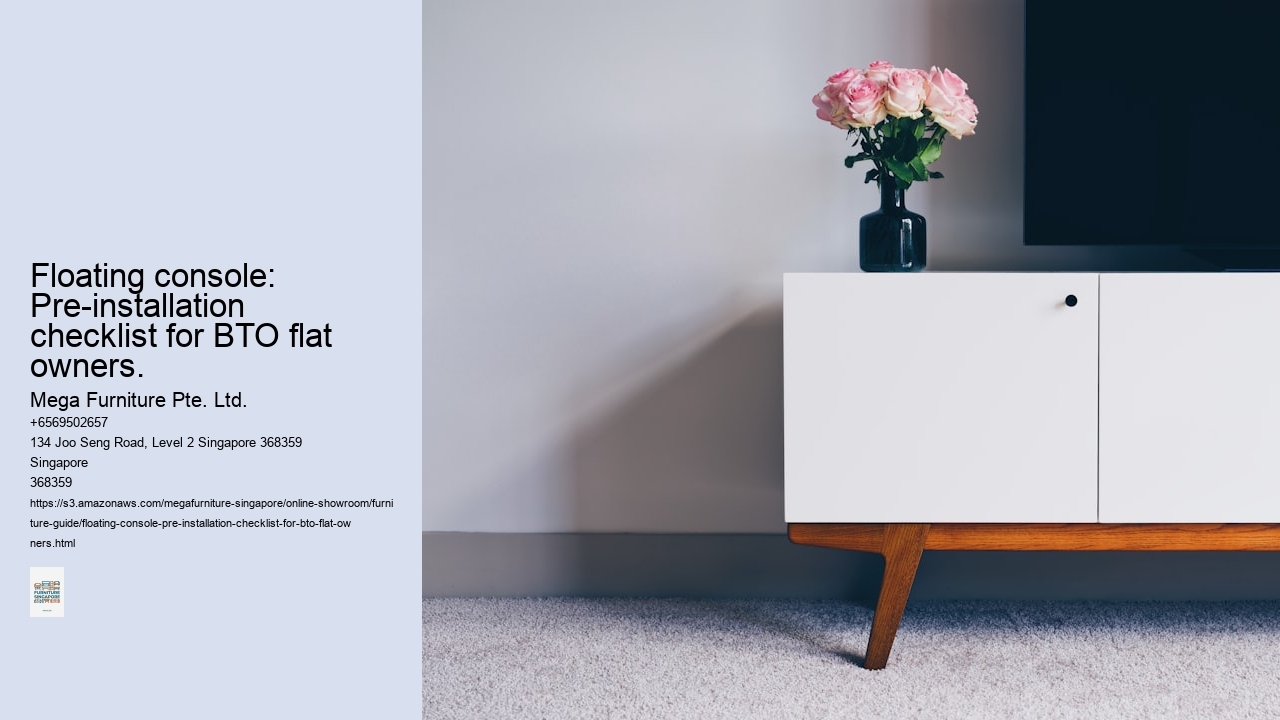
In a 4-room BTO with a west-facing wall, the humidity can spike to 80% by mid-afternoon, and that’s when a solid wood console starts to feel its environment. It’s a slow, quiet warping that first shows as a door that won’t quite close flush, a drawer that begins to stick. For a floating console that’s also a main thoroughfare from the dining area to the balcony, engineered wood with a full-wrap PVC laminate edge is the pragmatic choice; the layers are pressed and sealed to resist the constant moisture, preventing the panel from bowing over a 200cm span.
Scratch-resistant finishes aren’t just a marketing point if you’ve got a cat that uses the console as a launchpad for the window grilles. Look for a surface rated for high traffic — a textured laminate or a thermofoil that doesn’t show every single claw mark in the morning light. It’s the difference between a piece that looks lived-in and one that looks defeated after six months.
Rounded corners are a non-negotiable safety spec for families with young children, a feature that’s often overlooked in favour of a sharper, more minimalist look. That 90-degree edge at shin height in a narrow walkway is an accident waiting to happen, especially when the console is floating and the entire lower edge is exposed. A soft, radiused corner takes the danger out of a late-night stumble to the kitchen.
For non-air-conditioned living rooms, which is the reality in many HDB flats where the air-con is saved for the bedrooms, solid wood becomes a liability. It expands and contracts with the wet-dry cycles, and you’ll eventually hear faint creaks from within the carcase. Engineered core materials, properly sealed, offer a stability that’s better suited to Singapore’s climate — they’re built for this, not adapted to it. You can explore a range of these durable options in Megafurniture’s collection, where finishes are typically specified for local conditions.
The final test is often the underside, the part you don’t see once it’s installed. A quality piece will have a sealed back panel and screw holes treated to prevent moisture ingress; a cheaper one might leave raw particleboard exposed, which acts like a sponge in our humidity. That hidden detail is what determines whether your console stays level and silent for a decade, or starts telling you the weather.
The most critical pre-installation step is identifying what's actually behind your plaster. Load-bearing brick walls, common in older HDB resale flats, provide a solid substrate for mounting. The newer, lightweight drywall partitions found in BTOs and condos are a different story—they’re essentially hollow boxes of gypsum board on a metal stud frame. You can often tell by the sound; a firm knock on a brick wall yields a dull thud, while a partition wall sounds hollow and slightly resonant. Mistaking one for the other is the fastest route to a failed installation.
For those hollow partitions, standard wall plugs are utterly useless. You’ll need specific hollow wall anchors designed to grip the inner cavity of the drywall, like toggle bolts or snap-toggle anchors. These devices spread the load behind the plasterboard, creating a much more secure hold. The required size and weight rating depend entirely on your console's loaded weight—a 200cm floating console packed with a soundbar and gaming gear is a serious load. Skimping here isn't an option; it’s an invitation for the entire unit to pull free from the wall.
A console’s mounting bracket isn't just a piece of metal; it’s a weight-distribution engine. A well-designed system uses a long, horizontal rail that spreads the mounting points across several wall studs, rather than concentrating force on just two. This effectively turns a point load into a distributed load, which is far safer for drywall. Before you buy, verify the bracket’s design and check that its fixing points align with your wall’s stud spacing, typically 400mm or 600mm centres. A flimsy bracket can compromise even the most secure wall anchors.
Overloading is a silent killer. The stated weight capacity usually refers to the console itself, not the combined weight of your 65-inch TV, media players, books, and decorative objects. Exceeding this limit places immense stress on the anchors and can cause the plaster around the fixings to spider-web and crack. It’s a gradual failure—you might notice hairline fractures appearing over weeks before a more dramatic sag. For a family media wall, it’s wise to calculate the total weight and then add a significant safety margin.
When in doubt, get a second opinion. Many homeowners in Tampines or Bedok estates aren’t confident distinguishing wall types, and that’s perfectly fine. A quick consultation with a handyman or the installer from your furniture retailer can save you a world of trouble. They can confirm the wall material, recommend the correct anchor type, and even install the mounting rail for you. That small fee buys immense peace of mind, ensuring your feature piece stays securely on the wall for years to come.
The most common regret with a floating console isn't the colour or the wood grain — it's the 40cm void behind the unit, filled with a tangled nest of HDMI cables and a power brick that won't fit. Singapore buyers consistently underestimate the depth required for an AV receiver, which often pushes past 40cm once you account for ventilation and rear connections. A sleek console with a 30cm interior depth might look perfect against a feature wall, but it'll force you to leave the receiver out on the floor, defeating the entire purpose of concealed storage.
That leads directly to the second oversight: forgoing a back panel. Without one, every cable from the receiver, gaming console, and soundbar spills out into the gap between the wall and the console's back edge. In a living room with a light-coloured feature wall — say, a popular off-white or light grey laminate — that clutter becomes a stark, shadowy silhouette. It's the visual equivalent of a power strip left on the floor; you tidy everything inside, but the mess is still plainly visible from the side.
Planning for concealed cable management isn't just about buying a longer HDMI cable. It involves measuring the total run from your wall-mounted TV's outlet down to the console's intended internal position, then ensuring the console design has dedicated channels or openings to route those cables internally. Many buyers assume they'll just drape cables behind the unit, but that creates tension points and makes future upgrades, like swapping out a media player, a frustrating exercise of pulling the entire console away from the wall.
The practical solution is to treat depth and cable routing as your first two specifications, not your last. Look for consoles designed with a rear access panel or a false back that can be removed, which allows you to reach in and reorganise cables without moving the entire structure. And always verify the internal clearance against the actual dimensions of your equipment — not just the TV, but the bulkiest component you'll hide, which is usually that AV receiver.
You can find floating consoles with these practical details addressed, like those in Megafurniture's collection, which include models with deeper cavities and removable back boards. It's a small design choice that separates a genuinely clean installation from one that merely looks tidy from three metres away.
The showroom lighting at Megafurniture’s Joo Seng outlet is generous — which is precisely why you should run a finger along the top edge of any console you’re considering. That bright, even glow reveals everything: a slight ripple in the laminate, a tiny gap where the end panel meets the frame, or a finish that looks more plastic than wood-grain from an angle. What appears seamless online can show its assembly under the fluorescent tubes; it’s a necessary stress test for a piece that will live in your living room’s spotlight. Don’t just look — operate. Open every door and slide every drawer. The action should feel consistent, without any sudden catches or a need to lift and jiggle. Hinges on cabinet doors shouldn’t sag when open, and soft-close mechanisms, if present, ought to engage reliably every single time. A drawer that sticks in the showroom, where humidity is controlled, will likely be worse in a typical HDB corridor-facing living room after a rainy week. Then, get out your tape measure. Product listings will state external dimensions, but internal compartment clearance is what matters for your gear. We pulled a console at the Tampines showroom that claimed to fit a PlayStation 5; its advertised interior height was just enough, but a fixed centre shelf reduced the actual usable space to a sliver. You’ll want to verify there’s also room for a router, a media streamer, and the inevitable tangle of cables behind them. Bring the dimensions of your largest component and physically check. This hands-on verification extends to matching the unit against its online catalogue images. Colours, especially for oak or walnut finishes, can shift dramatically between your phone screen and reality. Seeing the item in person at the showroom address lets you confirm the tone matches your existing flooring or feature wall — a mismatch that’s costly to rectify after delivery. Ultimately, the showroom visit is about moving from a digital abstraction to a physical object you’ll live with for years. It’s where you confirm that the
floating TV consoleisn’t just a pretty picture, but a properly built piece of cabinetry that will actually house your life.
The pre-assembled floating console you ordered online won't get past the lift landing if it's over 2.1 metres — a common reality in older HDB blocks around Bedok or Tampines. Confirm the exact dimensions with your retailer before payment; many flat-pack units are designed for lift transport, but fully assembled consoles often exceed that critical threshold. You'll then face the costly, disruptive headache of a stairwell delivery, with movers charging extra per floor and risking scuffs on your new piece.
Schedule the installation after your living room walls are painted but before any carpet or vinyl flooring is laid. This sequence lets installers drill into fresh plaster without worry, and any dust from mounting can be vacuumed before the final floor covering goes down. It's a simple logistical step that most homeowners overlook in the rush to finish.
A one-year warranty is standard for furniture here, but the devil's in the detail — specifically, who covers the labour cost for a repair. Some warranties only cover the replacement part, leaving you to pay a technician's call-out fee, which can hit $80 to $120 in Singapore. Scrutinise the terms: a comprehensive warranty should include both parts and labour for the duration.
For larger consoles, especially those spanning 240cm to accommodate a 75-inch TV, verify that the delivery team includes proper assembly. A floating unit requires solid mounting into brick or reinforced concrete, not just plasterboard; a botched install means your expensive media gear hits the floor. It's worth asking if the retailer offers a recommended third-party handyman service for complex wall types.
You can review specifications and services for various models at Megafurniture’s collection.
Singapore shoppers don't ask about aesthetics first; they ask about weight limits and fibre cables. The queries are practical, born from 4-room BTO layouts and resale flat constraints, and they reveal a local buyer's hierarchy of needs: function, then finish.
Can a floating console hold a 75-inch TV? It depends entirely on the wall. Most 75-inch consoles are around 180cm long and need solid mounting. If your BTO living room wall is drywall over hollow blocks, you'll need professional installation with proper anchors; a concrete wall in a resale flat is far more forgiving. The console itself can typically handle the weight, but the wall's composition is the real variable.
Best colour for a north-facing resale flat? North-facing rooms get cooler, diffused light, which can make spaces feel darker. Light finishes like oak, maple, or white laminate help reflect that available light, brightening the room. Dark walnut or charcoal looks rich in north light too, but it'll absorb more light — a trade-off between mood and perceived spaciousness.
Difference between KD and pre-assembled? KD (knock-down) furniture arrives flat-packed for self-assembly, which saves on delivery cost but demands a weekend and a drill. Pre-assembled units arrive ready to place, a clear advantage for buyers without time or tools, though they often cost more due to bulkier shipping. In many HDB flats, the choice boils down to budget versus convenience.
How to hide the Starhub fibre termination point behind a console? Plan for a rear access panel. Many floating consoles have a back panel you can remove or drill through; you'll route the fibre cable through that opening into a dedicated compartment inside. It's a common request, so look for models designed with internal cable management channels — they keep the termination point accessible for technicians but hidden from daily view.
The most common regret with a floating console isn't the colour or woodgrain; it’s realising the mounting bracket can’t be secured properly because that sleek concrete-look feature wall is just plasterboard over a hollow frame. That’s a costly discovery on installation day. Before you commit, verify the precise wall material with your contractor or ID—solid brick, HDB’s structural concrete, or partition drywall—as this dictates the fixings and weight capacity. Simultaneously, confirm the exact locations of your power points and data ports against the console’s planned dimensions; a 200cm unit centred on a wall can easily cover a socket you’d assumed would be accessible.
Bring your living room floor plan with the furniture layout to the showroom. A console that looks proportionate in a vast warehouse will feel entirely different in a 4-room BTO’s living room, especially when you factor in the three-seater sofa’s depth and the swing of the balcony door. Laying out the physical footprint with a tape measure on your actual floor is better, but the scaled plan prevents the most glaring spatial mismatches—like buying a 240cm monolith that leaves no walking space beside your display cabinet.
You’ll also need to decide between a seamless, built-in look and future reconfiguration flexibility. A fully custom, floor-to-ceiling media wall delivers a clean, integrated appearance but is essentially permanent; it won’t move with you to a condo in Tanah Merah. A standalone floating console, like many in Megafurniture’s collection, offers more adaptability for future room layouts or tech upgrades, though the gap between its top and the wall-mounted TV can collect dust.
Consider the cable management system now, not later. The clean floating effect is ruined by a tangled nest of HDMI and power cords dangling beneath. Opt for a model with a dedicated rear channel or access panels that route everything neatly inside the carcass and directly to the wall outlets.
Finally, think about what you’re actually storing. If it’s just a soundbar and a game console, you might prioritise slim profile over depth. But if you need space for a centre-channel speaker, multiple gaming boxes, and board games, then internal compartment dimensions become critical—sometimes that extra 5cm of interior height makes all the difference.
The main door in a standard BTO layout swings into a 3.2 to 3.6 metre wide living room, and that's your first constraint. You'll lose 90 to 100 centimetres of wall space right off the bat - a console that's too long will get clipped by the door daily, a frustrating design flaw that's common in showrooms but unforgivable at home. Cable trunking, typically routed along the skirting to a single corner, further dictates placement; you can't centre a massive media wall if all your power and data points are huddled in one spot. A TV console anchors the wall opposite the sofa in the same way a tall bookshelf anchors a corner — long horizontal piece, mix of open and closed storage, defines the visual weight of one whole side of the room. Megafurniture's TV Console range covers floating wall-mounted designs, low-profile freestanding consoles, and modular feature-wall configurations. Most pieces sit at 40-50cm height, sized for screens up to 75 inches.. Proportion is everything. A 55-inch TV looks adrift above a 240-centimetre behemoth, while a 65-inch screen overwhelms a dinky 120-centimetre stand. The sweet spot is a console length roughly one-and-a-half times the TV's width: aim for around 140 centimetres for a 55-inch set, and 180 centimetres for a 65-inch. This creates a balanced visual anchor without making the wall feel top-heavy or the furniture undersized. It's a simple ratio that most homeowners ignore, then wonder why their new setup feels oddly off. That leaves you fitting your chosen console into the remaining wall span, which often means sacrificing a perfect centre alignment. You might need to shift the entire unit away from the door swing, accepting an asymmetrical look with a floor plant or a slim sideboard filling the gap. The alternative - a custom-built media wall that incorporates the console and hides all trunking - solves the alignment issue but commits you to a fixed layout for the next decade. For many, that's a trade-off worth making. Consider depth, too. A floating console should project just enough to hold a soundbar and perhaps a gaming console, but not so much it becomes a shin-bashing hazard in a narrow walkway. A 35 to 40 centimetre depth is typical, providing storage without intrusion. This shallow profile is why floating units have become a favourite for BTO living rooms; they maintain a sense of space in a 12 sqm area that a floor-standing cabinet would visually consume. Browse the options at
Megafurniture's collectionto see how lengths and depths translate in real room settings. Ultimately, your media wall' success hinges on these millimetre-perfect calculations - get them wrong, and you're left with a daily reminder of a planning oversight.
The main door in a standard BTO layout swings into a 3.2 to 3.6 metre wide living room, and that’s your first constraint. You’ll lose 90 to 100 centimetres of wall space right off the bat — a console that’s too long will get clipped by the door daily, a frustrating design flaw that’s common in showrooms but unforgivable at home. Cable trunking, typically routed along the skirting to a single corner, further dictates placement; you can’t centre a massive media wall if all your power and data points are huddled in one spot. Proportion is everything. A 55-inch TV looks adrift above a 240-centimetre behemoth, while a 65-inch screen overwhelms a dinky 120-centimetre stand. The sweet spot is a console length roughly one-and-a-half times the TV’s width: aim for around 140 centimetres for a 55-inch set, and 180 centimetres for a 65-inch. This creates a balanced visual anchor without making the wall feel top-heavy or the furniture undersized. It’s a simple ratio that most homeowners ignore, then wonder why their new setup feels oddly off. That leaves you fitting your chosen console into the remaining wall span, which often means sacrificing a perfect centre alignment. You might need to shift the entire unit away from the door swing, accepting an asymmetrical look with a floor plant or a slim sideboard filling the gap. The alternative — a custom-built media wall that incorporates the console and hides all trunking — solves the alignment issue but commits you to a fixed layout for the next decade. For many, that’s a trade-off worth making. Consider depth, too. A floating console should project just enough to hold a soundbar and perhaps a gaming console, but not so much it becomes a shin-bashing hazard in a narrow walkway. A 35 to 40 centimetre depth is typical, providing storage without intrusion. This shallow profile is why floating units have become a favourite for BTO living rooms; they maintain a sense of space in a 12 sqm area that a floor-standing cabinet would visually consume. Browse the options at
Megafurniture’s collectionto see how lengths and depths translate in real room settings. Ultimately, your media wall’ success hinges on these millimetre-perfect calculations — get them wrong, and you’re left with a daily reminder of a planning oversight.